
Government vs Private MBBS Colleges in India
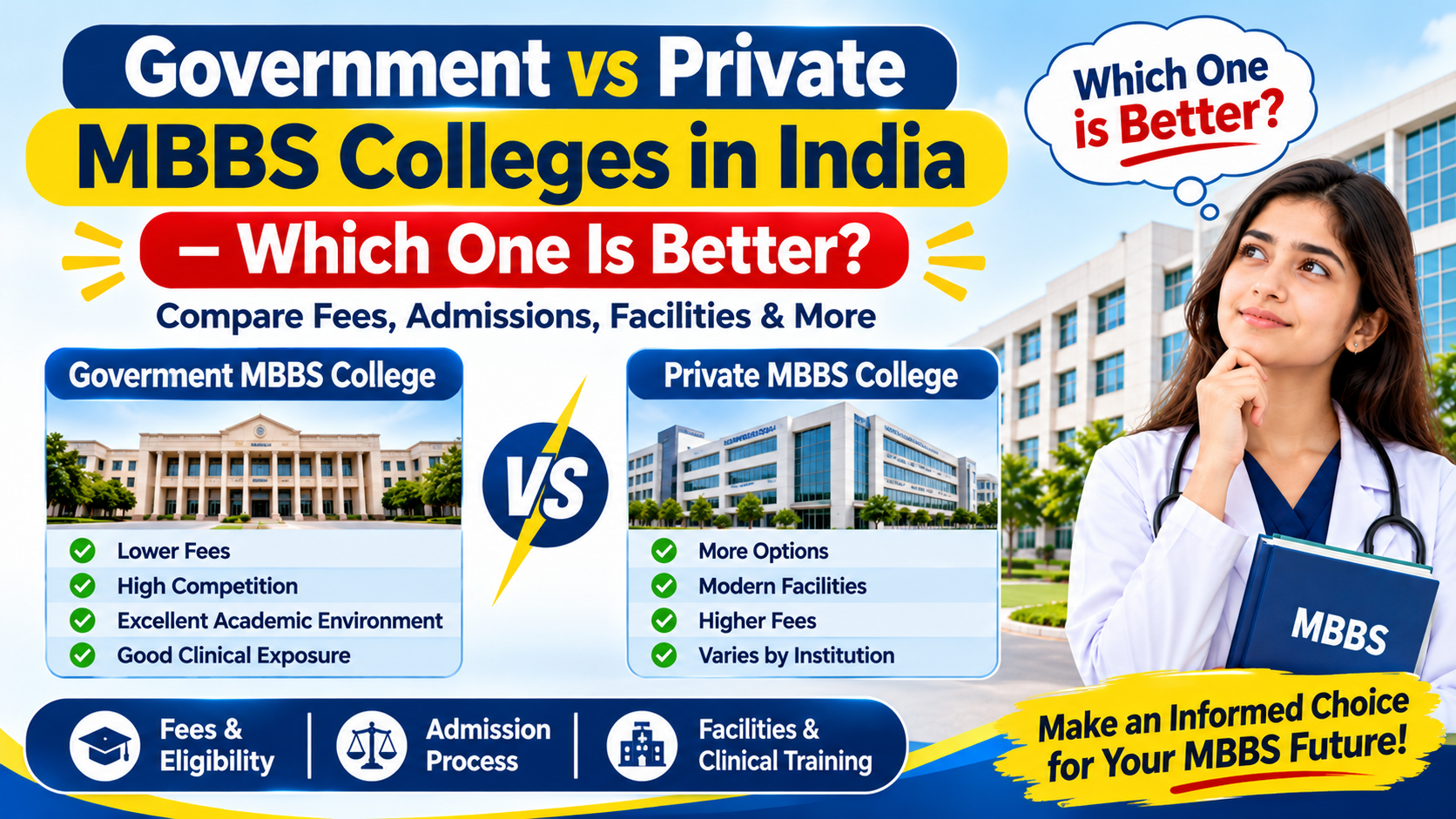
Government vs Private MBBS Colleges In India – Which One Is Better?
One of the most important decisions students have to make is whether to join a Government or Private Medical College for their MBBS. Understand the differences between them.
Getting into an MBBS medical course is a huge achievement for students wishing to pursue a career in medicine. Once you qualify for NEET UG, it is time to decide which medical colleges you would like to apply for based on your ranking, eligibility, budget, personal preference and counselling options.
Which One Is Better – Government or Private MBBS?
Whilst both Government and Private Medical Colleges offer MBBS courses, there can be big differences between the two. Things to note, such as tuition fees, number of seats, admissions and other factors, can affect your decision.
This guide outlines the differences between Government and Private MBBS Colleges in India to help you understand what to look out for.
1. Government vs Private MBBS Colleges – At a Glance
Below is a general overview of the differences between Government and Private Medical Colleges in India.
| Factor | Government MBBS College | Private MBBS College |
|---|---|---|
| Tuition Fees | Usually cheaper | Usually more expensive depending on institution and quota |
| Competition | Usually very high | Varies depending on Medical College, quota and counselling |
| Requirements | Qualify for NEET UG and follow counselling guidelines | Qualify for NEET UG and follow counselling guidelines |
| Infrastructure | Varies | Varies |
| Clinical Exposure | Varies depending on the number of patients and clinical facilities available at the hospital | Varies depending on the number of patients and clinical facilities available at the hospital |
| Seats Available | Includes relevant Government seat categories | May include state, management and NRI quotas depending on the institution |
Note: This is a general overview. Fees, admissions, seat categories and facilities will vary depending on the state and Medical College.
2. MBBS Tuition Fees – Government vs Private Medical Colleges
One of the largest differences between Government and Private Medical Colleges is tuition fees.
Government Medical College Fees
Government Medical Colleges tend to be more affordable, with lower tuition fees as they receive government funding.
However, you should also be aware of other costs:
- Hostel and accommodation fees
- Catering and mess fees
- Exam and university fees
- Security deposits
- Other relevant institutional fees
Private Medical College Fees
Private Medical Colleges tend to be more expensive, with higher tuition fees. Total fees will vary depending on the Medical College, University, state regulations and admission quota.
You may need to pay:
- Annual tuition fees
- Hostel and mess fees
- Admission and registration fees
- Security deposits
- Exam and institutional fees
Always check the latest official fees to ensure you know how much the full course will cost. Do not base your decision solely on tuition fees.
3. Admissions – Government vs Private MBBS Colleges
Medical Colleges in India require candidates to qualify for NEET UG. Both Government and Private Medical Colleges will follow the relevant admission and counselling guidelines.
Government MBBS Admissions
Government Medical Colleges are generally very competitive as there tends to be high demand with limited seats.
The admissions process will typically involve:
- Qualify for NEET UG.
- Confirm your eligibility and follow the relevant counselling guidelines.
- Register for the relevant counselling.
- Submit your preferences for Medical Colleges.
- Take part in seat allocation rounds.
- Attend your allotted Medical College and complete admission formalities.
Private MBBS Admissions
As with Government Medical Colleges, you will need to qualify for NEET UG. Different Medical Colleges will have different seat allocations depending on the institution and the state. They may have state, management and NRI quotas.
The admissions process will typically involve:
- Qualify for NEET UG.
- Confirm eligibility for the relevant seat category.
- Register for the relevant counselling.
- Check Medical College options, fees and seat availability.
- Submit your preferences and take part in counselling.
- Complete document verification and admission formalities.
Remember: You cannot avoid NEET and counselling for Private Colleges. Ensure you follow the relevant guidelines for the Medical College and seat category you wish to apply for.
4. Number of Seats Available and Competition
Government Colleges
- Government MBBS seats are in high demand among NEET aspirants.
- They can be very competitive as many candidates want to attend Government Medical Colleges because they are generally cheaper.
- Admission will depend on your NEET rank, category, quota, eligibility and counselling.
Private Colleges
- Private Medical Colleges offer extra MBBS options in many states.
- The number of seats and competition will vary depending on the Medical College and admission category.
- Ensure you check the fees, eligibility, state regulations and counselling requirements for the Medical College.
Always check the latest seat matrix from the relevant authority.
5. Infrastructure
When choosing a Medical College, you should consider the facilities on offer. A good learning environment should be provided to help with your studies, practical work and clinical training.
Government Medical Colleges
Facilities will vary between Government Medical Colleges. Some well-established institutions will have teaching hospitals, labs, libraries and clinical departments. Others may have developing infrastructure.
Private Medical Colleges
Some Private Medical Colleges will have modern buildings, labs, hostels and other facilities. However, this will vary between Medical Colleges.
Ensure you check the teaching facilities, hospital services, labs, library, hostel and clinical departments available.
6. Clinical Training and Hospital Facilities
Clinical training is an important part of your MBBS. You will gain knowledge through interacting with patients, clinical placements, practical training and working in various departments.
Both Government and Private Medical Colleges can provide valuable clinical training. This will depend on factors such as:
- Number of patients in the attached teaching hospital.
- Clinical departments.
- Variety of medical and surgical cases.
- Staff and clinical supervision available.
- Opportunities for practical training.
A Government Medical College may have a high number of patients, whereas a Private Medical College may have good clinical facilities. It is important to consider the teaching hospital.
7. Which Will Help Your Medical Career?
Both Government and Private Medical Colleges will help you gain your MBBS if the institution and course are recognised and regulated.
Your career will depend on factors such as:
- Your performance during your MBBS.
- Clinical knowledge and practical skills.
- Internship experience.
- How well you prepare for postgraduate entrance exams.
- Quality of teaching and clinical training.
- Your career aspirations.
Rather than deciding based on whether a college is Government or Private, compare the academic environment, hospital facilities, staff and training opportunities.
8. Benefits of Government Medical Colleges
Some key benefits of Government Medical Colleges are:
- Cheaper fees: Government Medical Colleges are often cheaper than Private Medical Colleges.
- High patient exposure: Many Government teaching hospitals have a high number of patients.
- Good academic environment: Many well-established Government Medical Colleges have experienced staff.
- Low overall cost: Lower tuition fees can reduce the overall cost of studying MBBS.
9. Benefits of Private Medical Colleges
Private Medical Colleges can provide some great opportunities for MBBS aspirants.
- More options: Private Medical Colleges increase the number of MBBS options available in many states.
- Different admission categories: Some Medical Colleges offer seats under the relevant state, management and NRI categories.
- Modern facilities: Some institutions have modern facilities, hostels and other facilities for students.
- More college choices: You can compare Medical Colleges across different states. Ensure you are eligible and follow the relevant counselling guidelines.
Ensure you check the recognition, fees, hospital facilities and quality of the Medical College.
10. What to Look for When Choosing an MBBS College
Do not decide based on fees or reputation alone.
Things to check before submitting your counselling preferences:
- Recognition: Check that the Medical College and MBBS course are recognised by the National Medical Commission (NMC).
- Fees: Check the tuition fees and additional fees.
- Hospital: Check the attached teaching hospital and clinical departments.
- Clinical Training: Understand the number of patients and opportunities for practical training.
- Staff: Check that qualified staff are available.
- Accommodation: Check the hostel facilities, catering and other facilities if you are staying there.
- Distance: Consider how far away the Medical College is, along with transport and living costs.
- Bond/Service: Check whether there are any bond, service conditions or penalties.
- Admissions: Check the latest counselling information and eligibility requirements for the relevant quota.
11. Government or Private MBBS – What Should I Choose?
The best choice for you will depend on your NEET ranking, budget, location preferences, eligibility and the quality of Medical Colleges available.
Choose a Government College If:
- You are eligible to gain a Government seat based on your NEET ranking.
- You want a more affordable option for your MBBS.
- The Medical College has suitable academic and clinical facilities.
- You are eligible for the relevant quota and counselling.
Choose a Private College If:
- You want extra MBBS options.
- You can afford the full course fees and other costs.
- The Medical College has suitable recognition, facilities and hospital facilities.
- You are eligible for the relevant seat category.
Overall, a good Medical College will fit your academic needs, provide sufficient clinical training and be within your budget. Be sure to compare individual Medical Colleges.
12. Frequently Asked Questions (FAQs)
1. Are Government MBBS Colleges better than Private MBBS Colleges?
Government Medical Colleges generally have cheaper tuition fees. However, the quality of education and facilities will vary between Medical Colleges. A well-equipped Private Medical College can provide good medical education.
2. Are Private MBBS Colleges more expensive?
Yes, generally. Private Medical Colleges will usually have higher tuition fees. The exact amount will depend on the institution, state regulations and admission quota.
3. Do I need to sit NEET for Private MBBS Colleges?
Yes. To gain admission to MBBS in Government and Private Medical Colleges in India, you will need to qualify for NEET UG.
4. Can I gain admission to a Private Medical College with a low NEET score?
This will depend on the requirements, your NEET ranking, number of seats, eligibility and relevant counselling guidelines. Check the latest counselling information for this year.
5. What is the difference between management and government quotas?
Government quota seats will be filled under the relevant Government seat allocation guidelines. Management quota seats will be available at specific Private Institutions under the relevant guidelines and counselling process. Eligibility and fees may vary.
6. Do Private Medical Colleges provide good clinical training?
This will depend on the attached teaching hospital, number of patients, departments available and practical training. Be sure to compare individual Medical Colleges.
7. Can I gain a Government MBBS seat via state counselling?
Yes. State counselling authorities will carry out admissions for relevant state quota seats in Government Medical Colleges. Eligibility, domicile and seat allocation will vary between states.
8. Is the MBBS degree different in Government and Private Colleges?
The MBBS degree will be awarded under the relevant medical education guidelines. Ensure the Medical College and course are recognised and approved.
9. What counselling do I need for Private MBBS admissions?
This will depend on the institution and seat category. MCC carries out counselling for specific categories, such as deemed universities. State counselling authorities will carry out counselling for relevant state-level seats in Private Medical Colleges. Always check the latest counselling scheme.
10. How do I choose the right MBBS College?
Compare the recognition, total fees, hospital facilities, staff, clinical training, location and admission requirements. Choose Medical Colleges based on your NEET rank, budget and preferences.
Need Help Choosing the Right MBBS College?
It can be difficult to decide between Government and Private MBBS Colleges. Understanding your NEET ranking, counselling options, fees and eligibility will help you decide.
Get personalised advice on MBBS admissions and counselling by contacting Dream Careers today.
Call: +91 95222 21191 / +91 95222 21192
Email: help@dreamcareers.co.in
Website: https://dreamcareers.co.in/
Notes
- To gain admission to MBBS in India, you will need to qualify for NEET UG.
- Fees, seats and eligibility will vary between Medical Colleges, states and admission categories.
- Always check the latest official counselling notifications and fees.
- Ensure the Medical College and course are recognised by the National Medical Commission.
Disclaimer: This article is for general information and educational purposes only. Admission requirements, fees, seats and counselling can vary from year to year. Candidates should refer to official notifications from the relevant authorities.